
Reframing food loss as a visibility problem in 48 hours
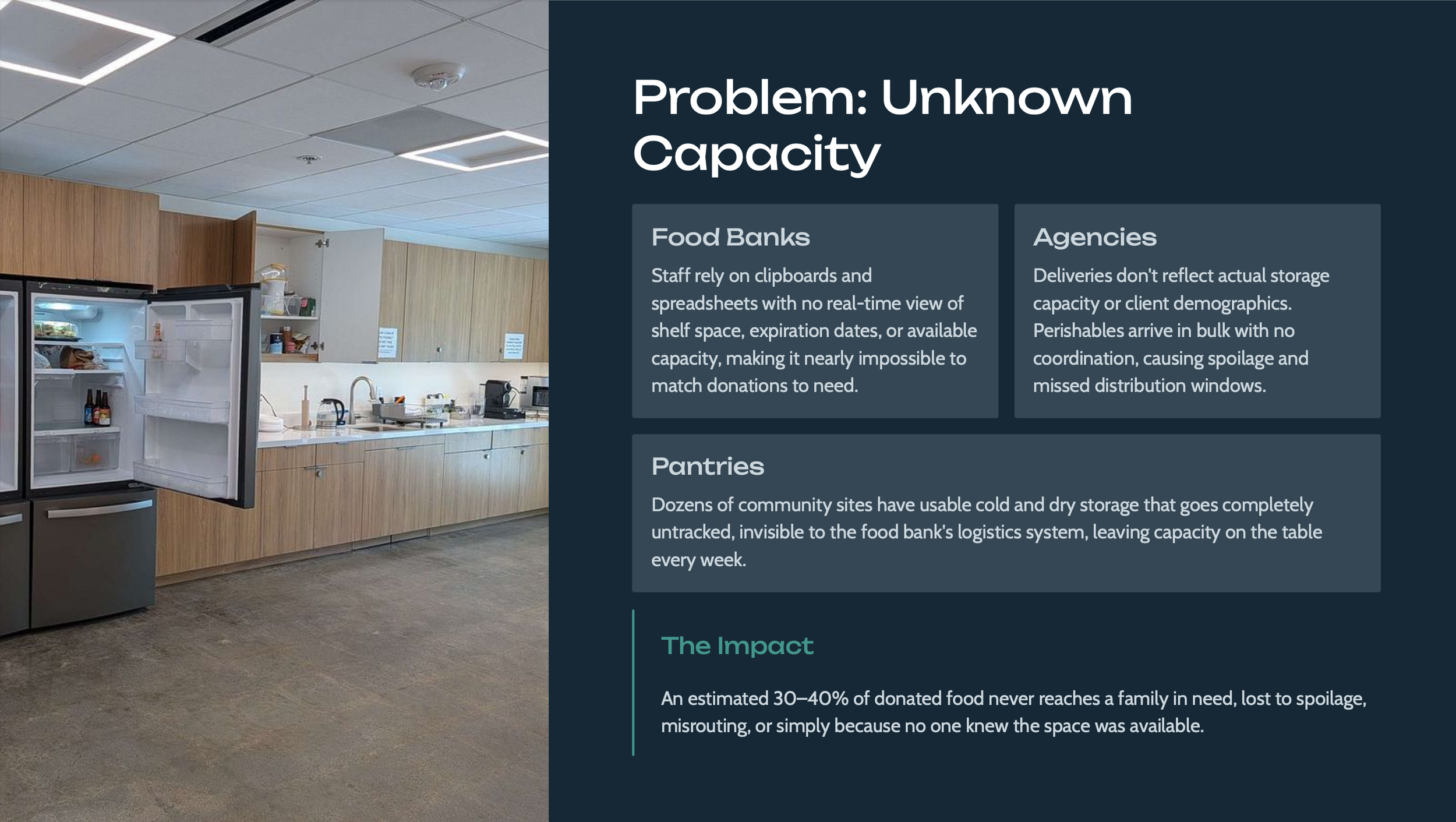
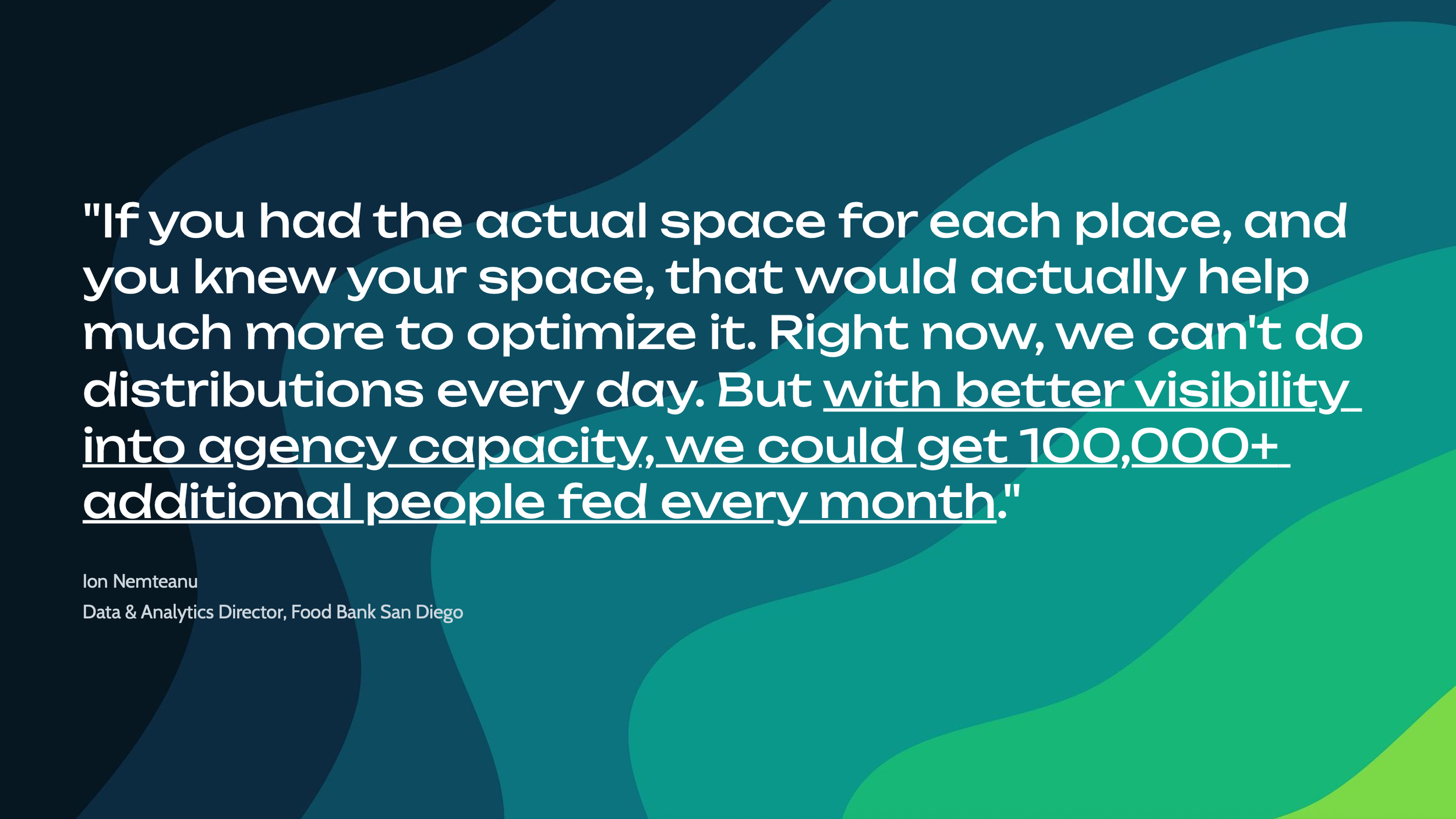
A stakeholder estimate suggests better storage visibility could help feed 100,000 more people a month in San Diego
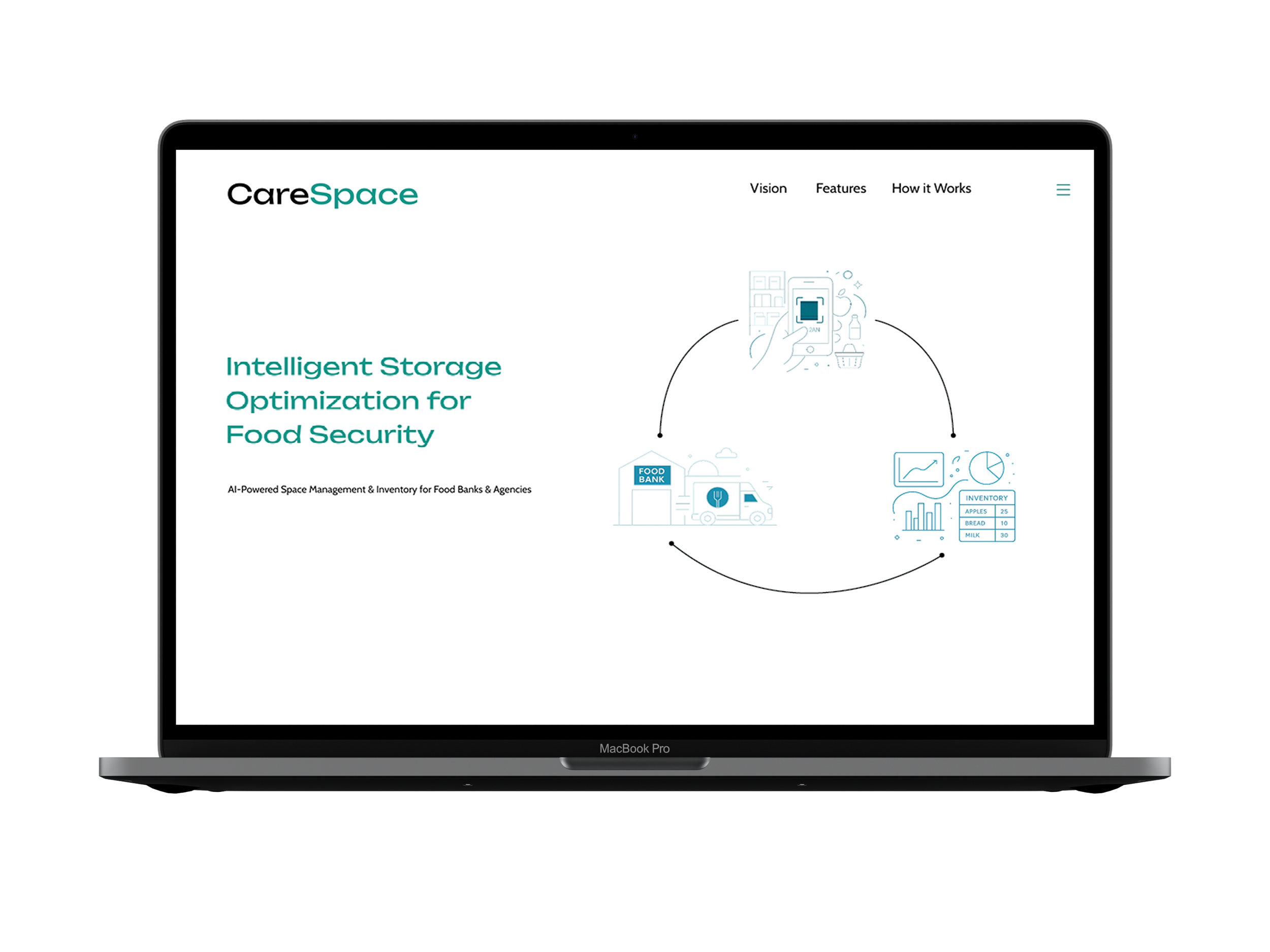
Intelligent Storage Optimization for Food Security
Project Type
Service Design & Product Strategy: B2B SaaS Concept
Research Partner
San Diego Food Bank
Scope
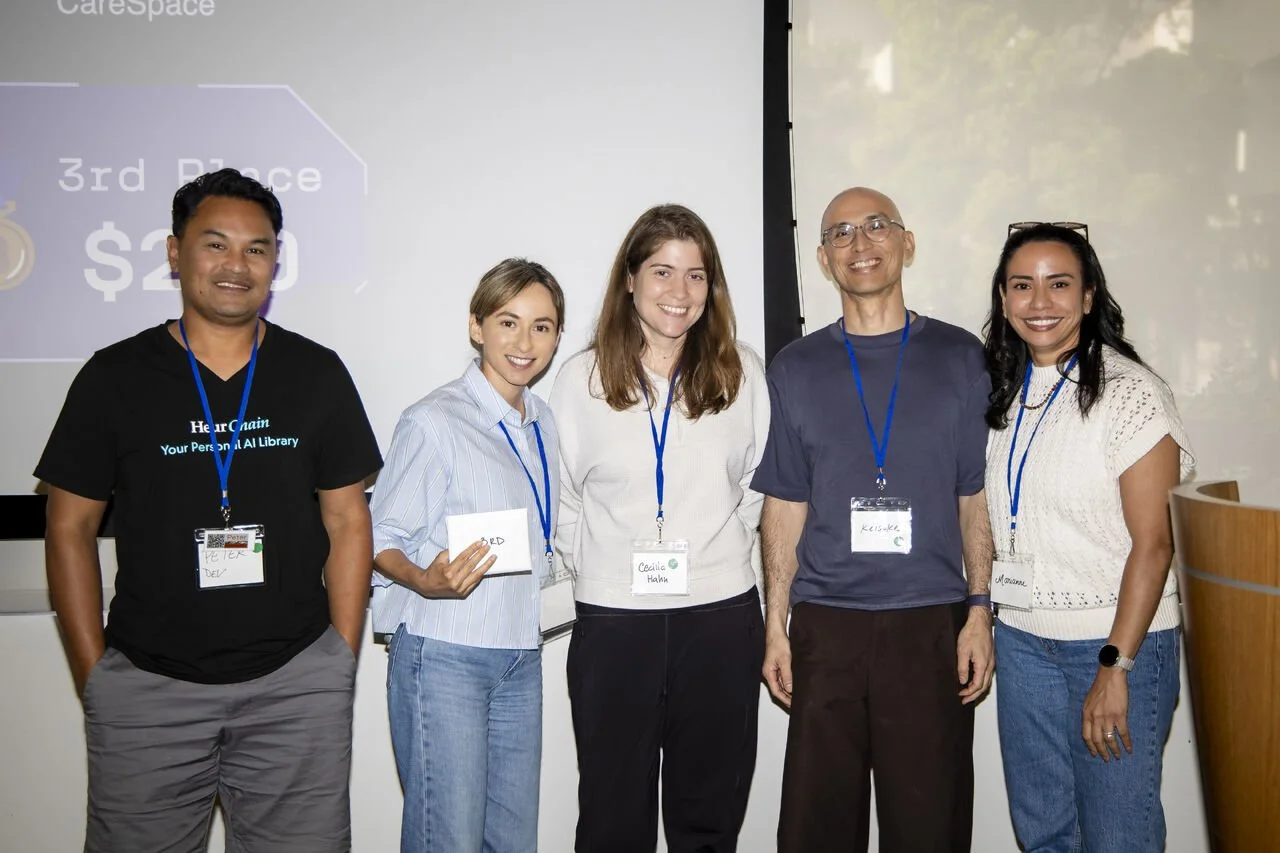
2026: Building for Good | 2-day Hackathon – 3rd place | Social Innovation
Host
Data Science Alliance at UCSD
Role
UX Designer, Research Lead · 0→1
Contributions
Lead: Team leadership · Sprint facilitation · Dev & data science handoff
Research: Stakeholder interviews · Personas · Day-in-the-life scenarios · Journey map · Service blueprint
Strategy: Problem reframing · Value proposition · Feature definition
Design: Feature UI (sketches & AI-assisted design)
How I Used AI
I worked with Claude as a production partner. My field research, sketches, and design decisions went in; strategy (problem framing, value proposition, features), research synthesis (personas, day-in-the-life scenarios, journey map, service blueprint), and feature UI came out in hours instead of days, which left the team’s time for stakeholder research and decisions.
Team
Digital Designer, Two Developers, Data Scientist, Product Manager
Overview
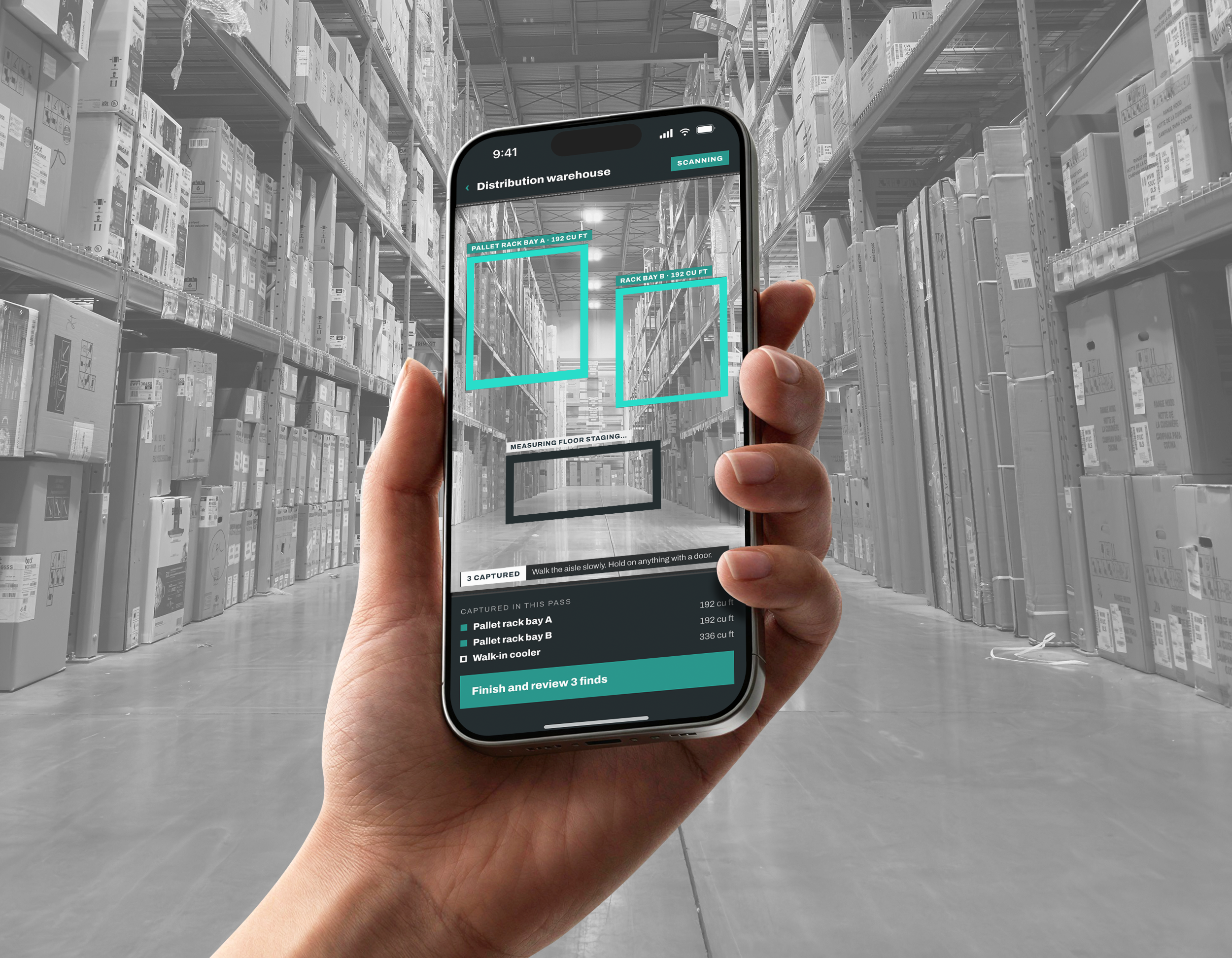
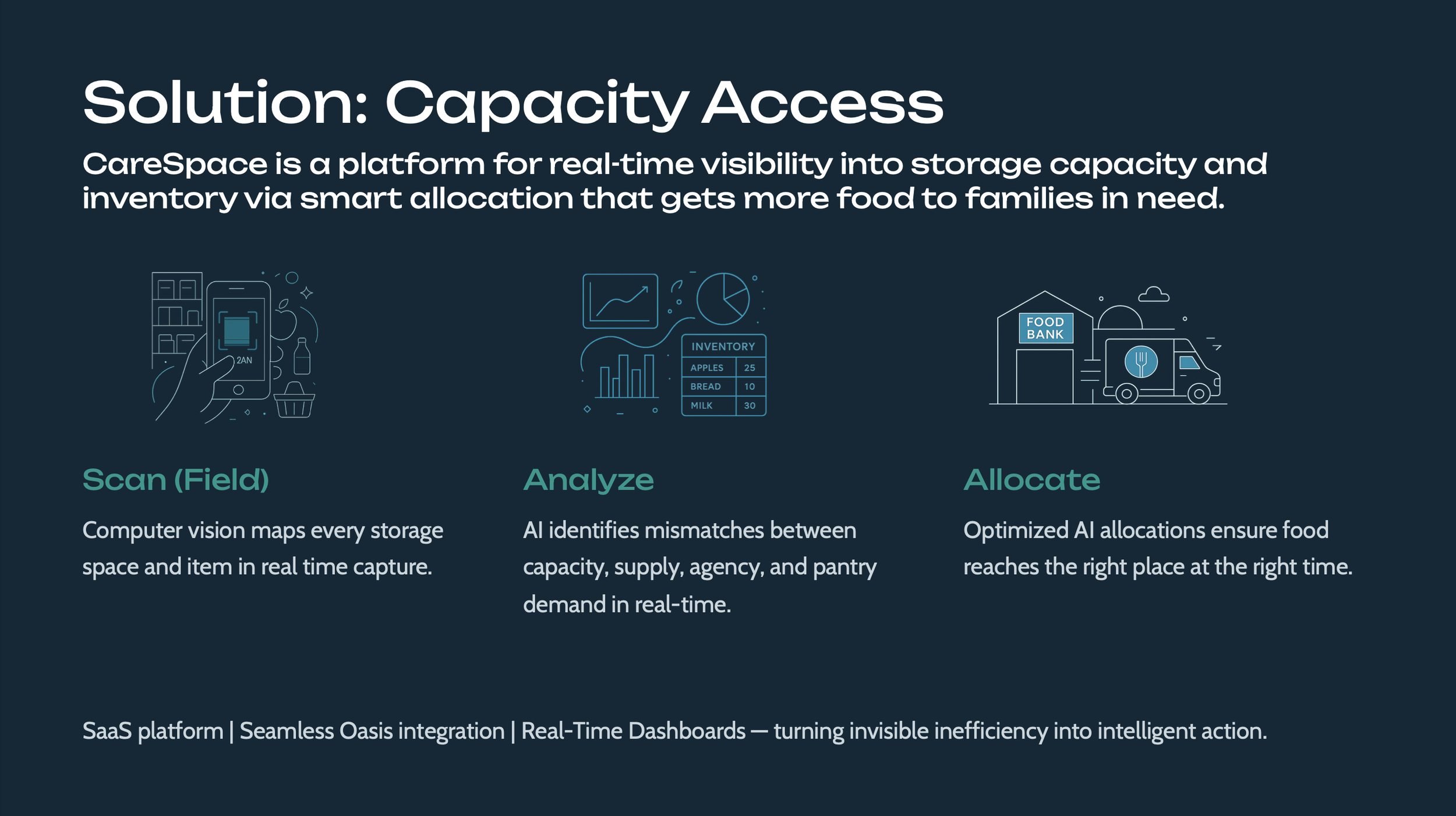
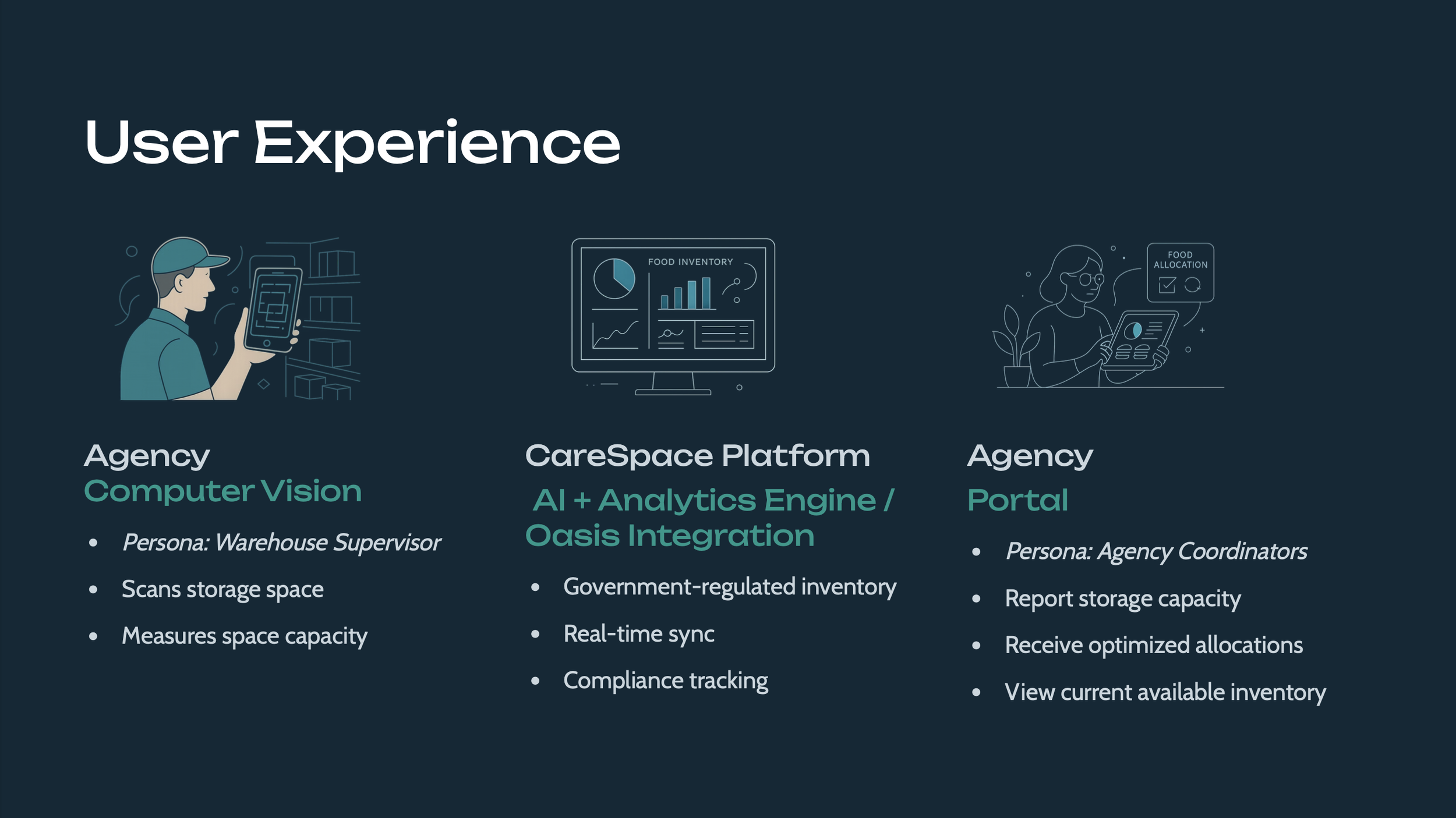
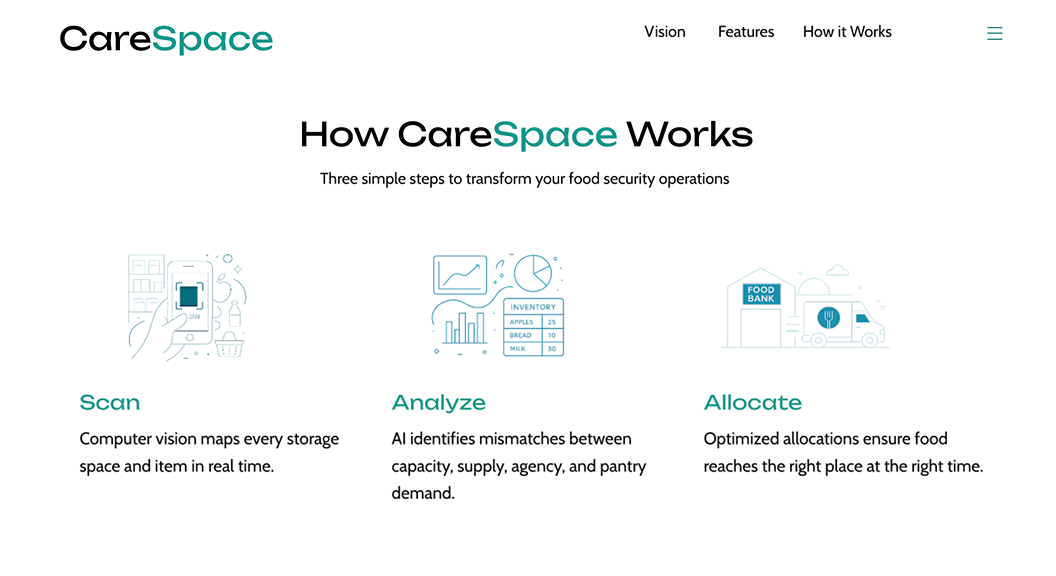
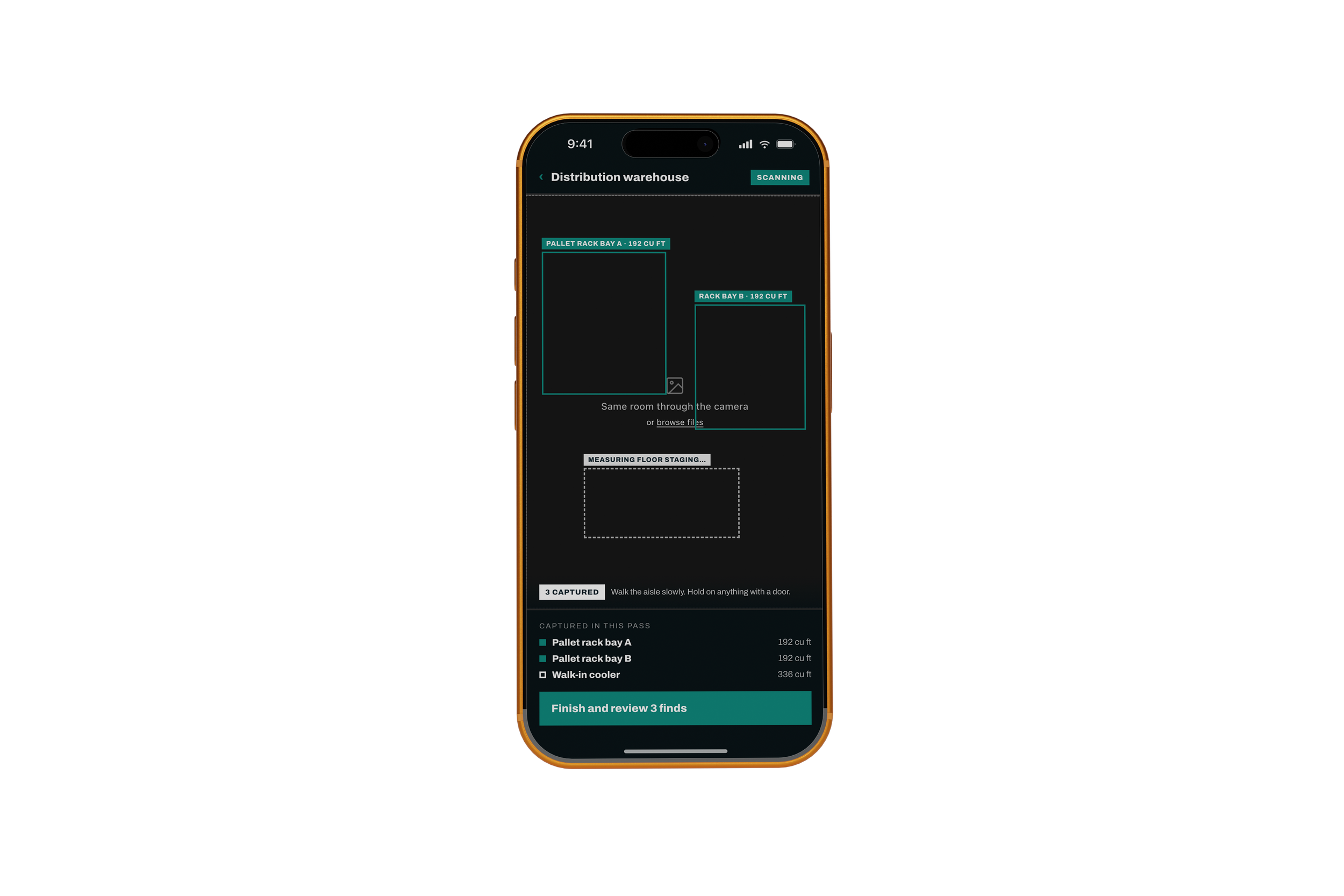
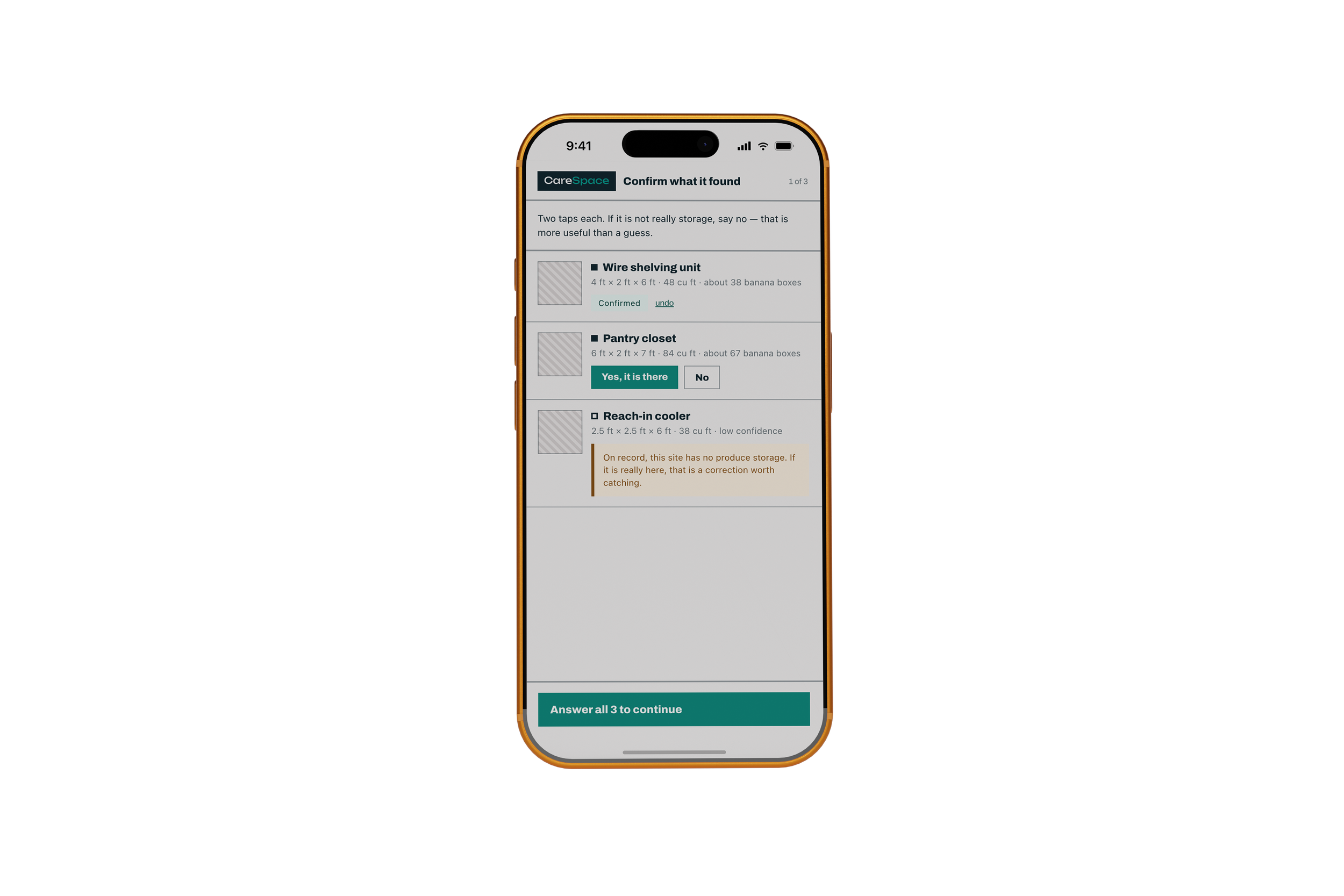
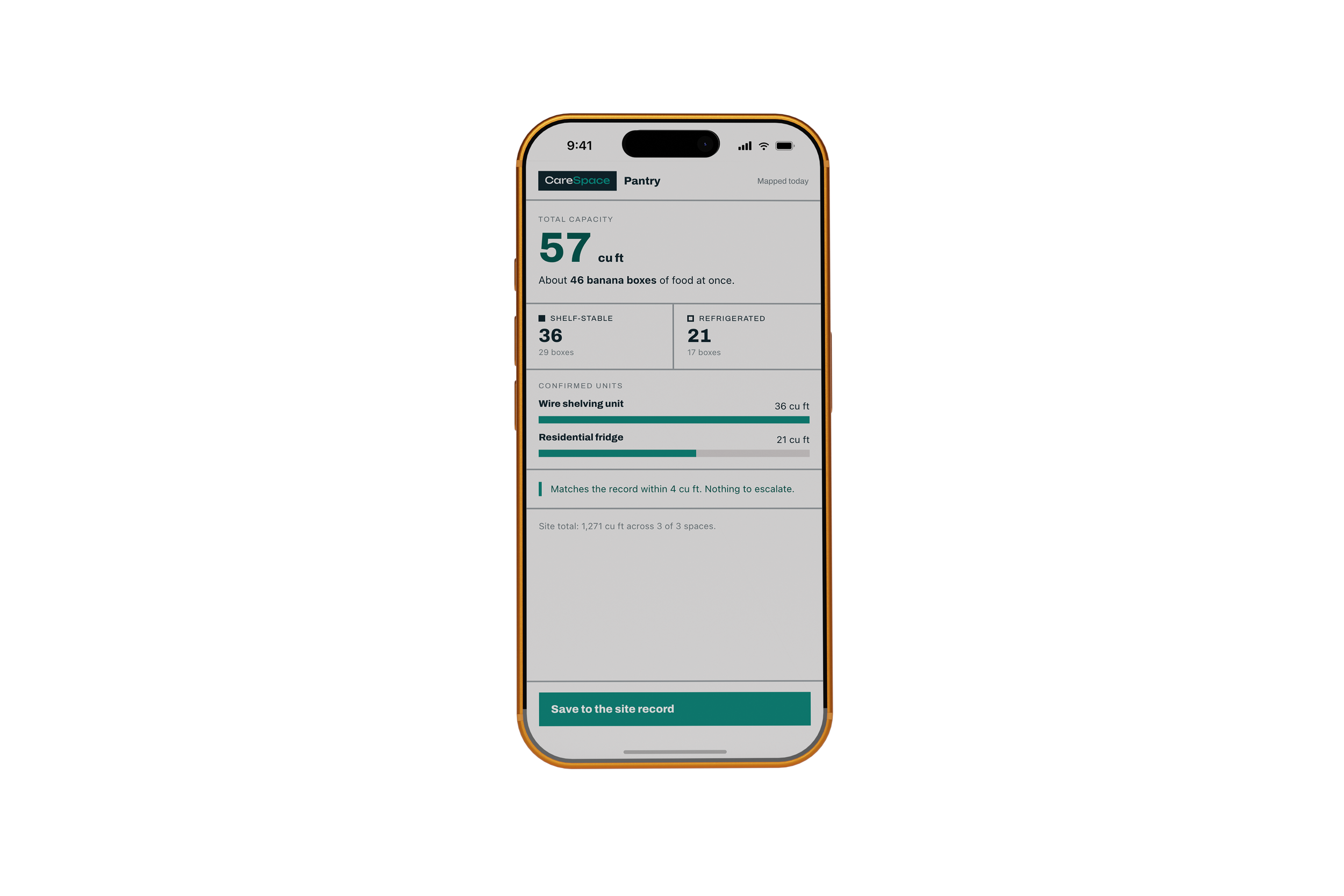
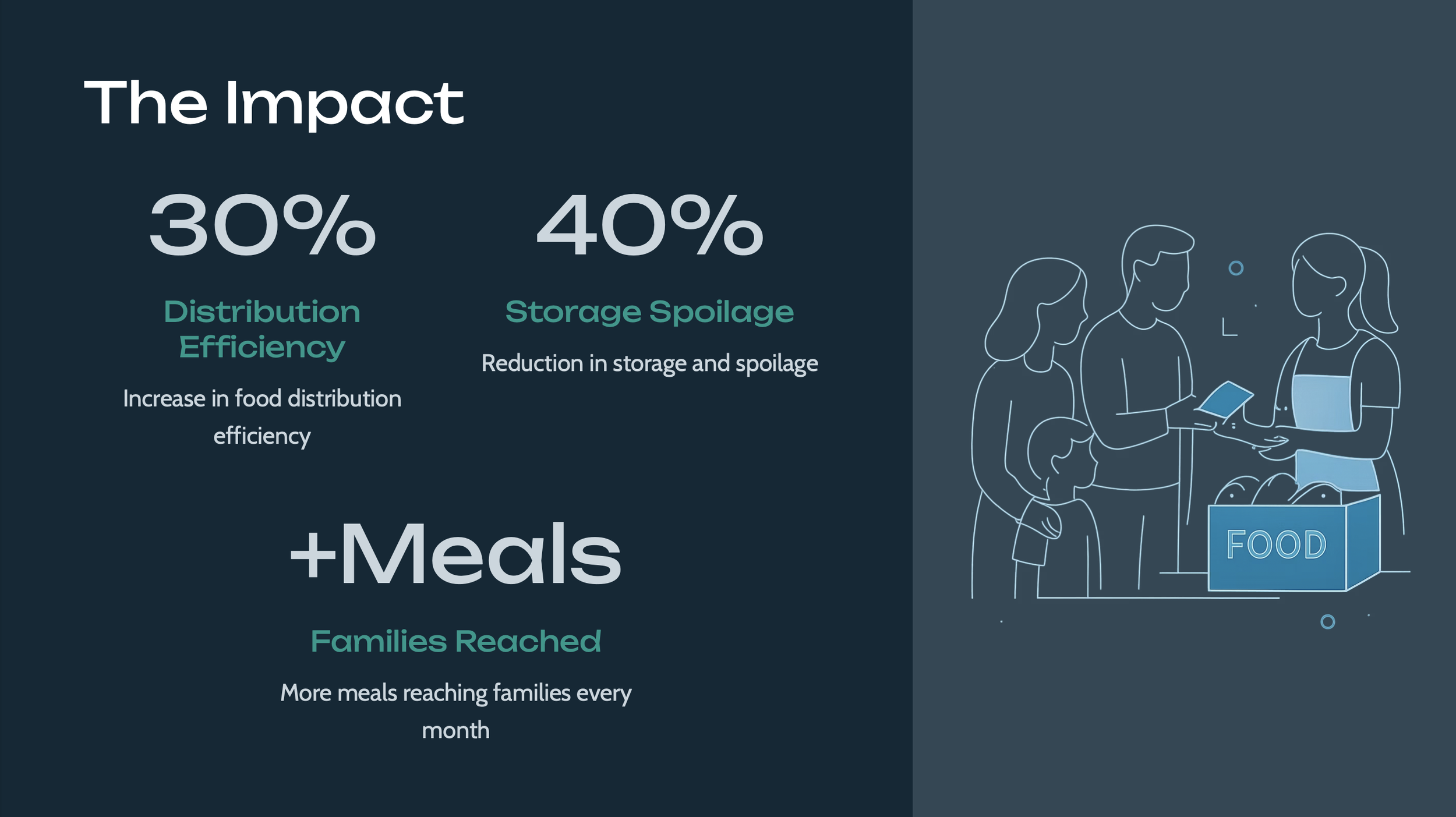
CareSpace is an AI-powered platform that addresses the hidden cause of food loss: visibility, not supply. An estimated 30–40% of food bank donations never reach families because storage capacity constraints go unseen. As UX Designer: Research Lead, I led research and systems thinking that reframed the problem from logistics to information architecture, resulting in a three-part solution, Scan (computer vision), Analyze (AI inventory), Allocate (real-time routing), that gives food banks live visibility into agency capacity. Our pitch proposed a pilot with Food Bank San Diego; the platform projects 30% distribution efficiency gains, 40% spoilage reduction, and 100,000+ additional people served monthly.
How might we make food allocation data-informed instead of guess-driven?
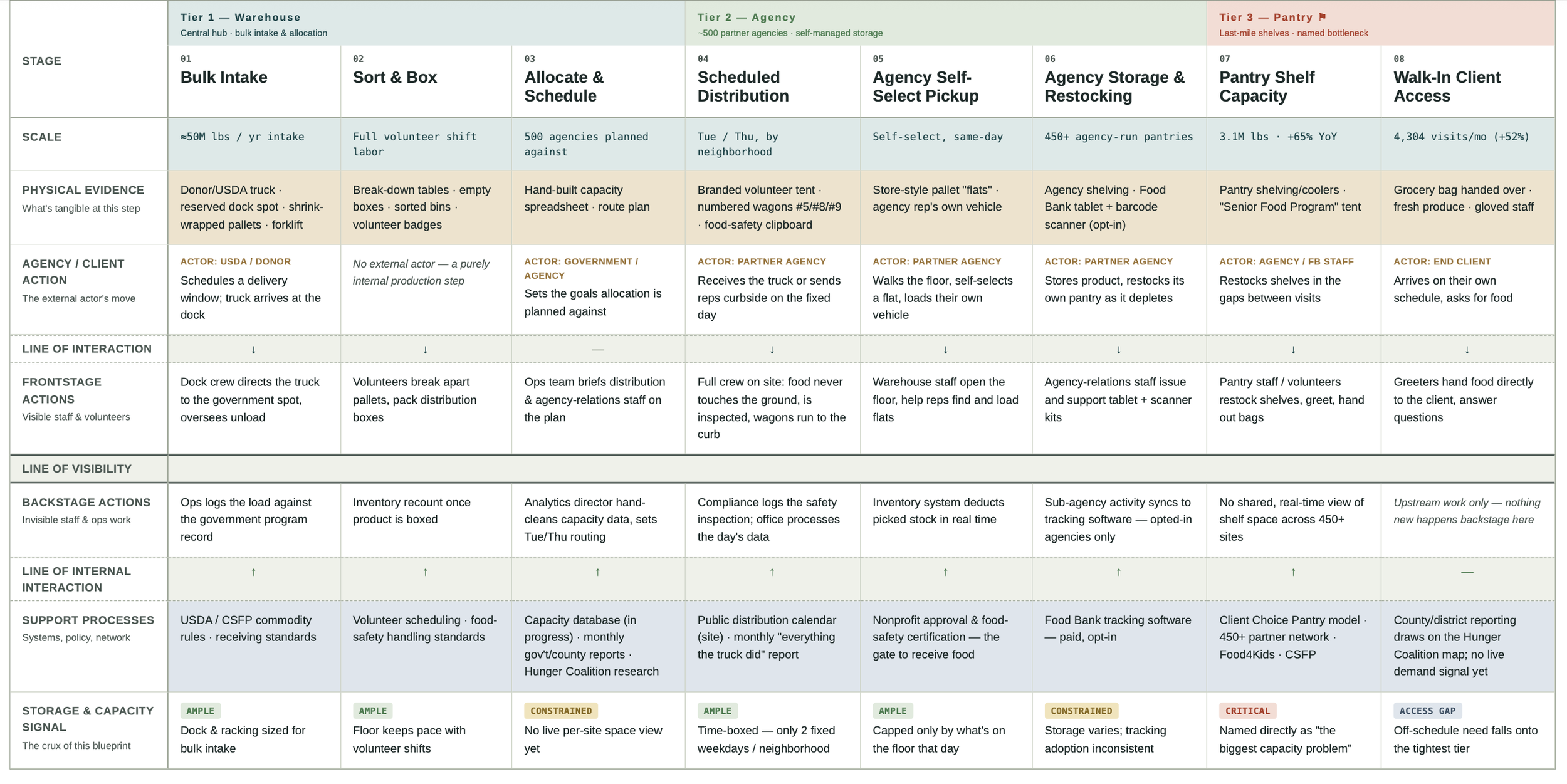
Service Blueprint
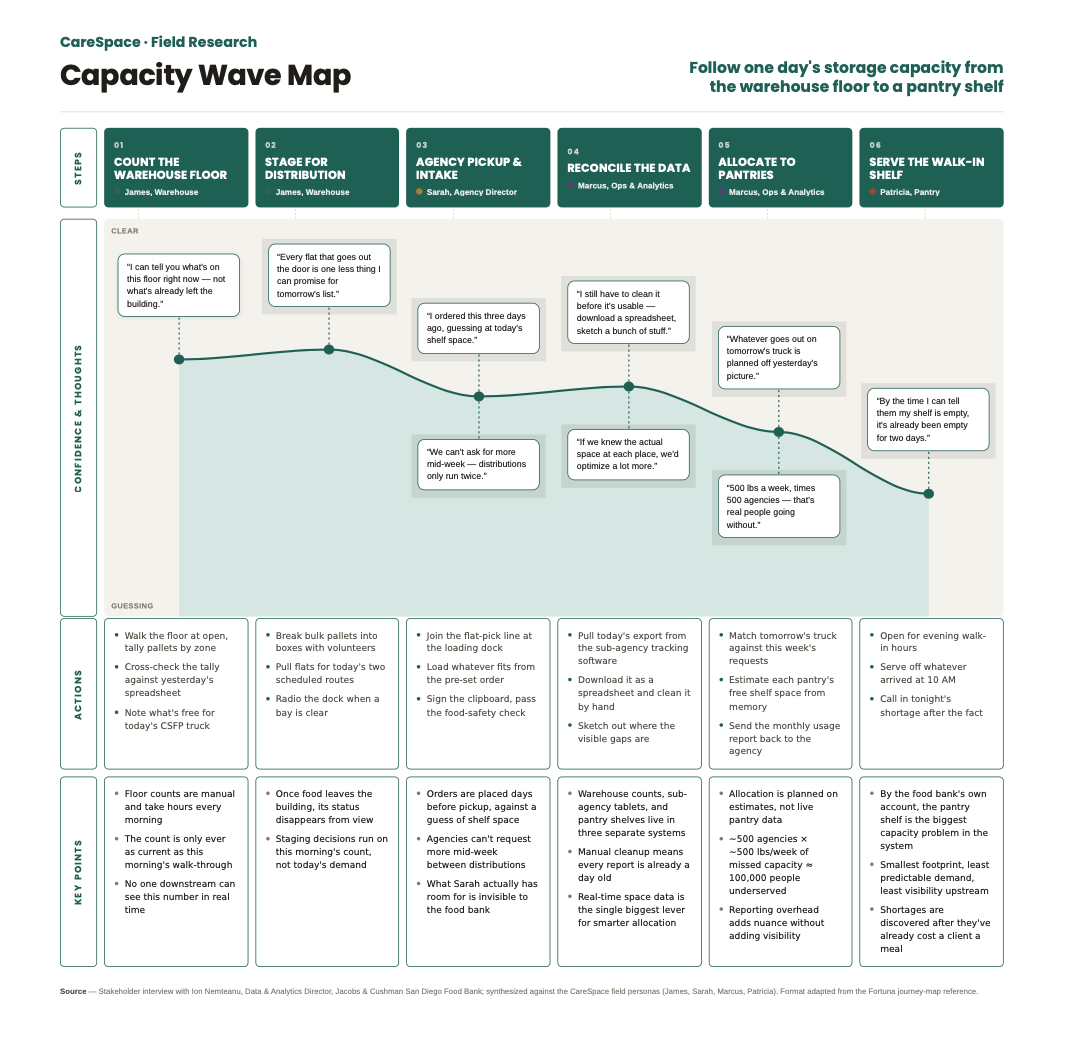
Journey Map
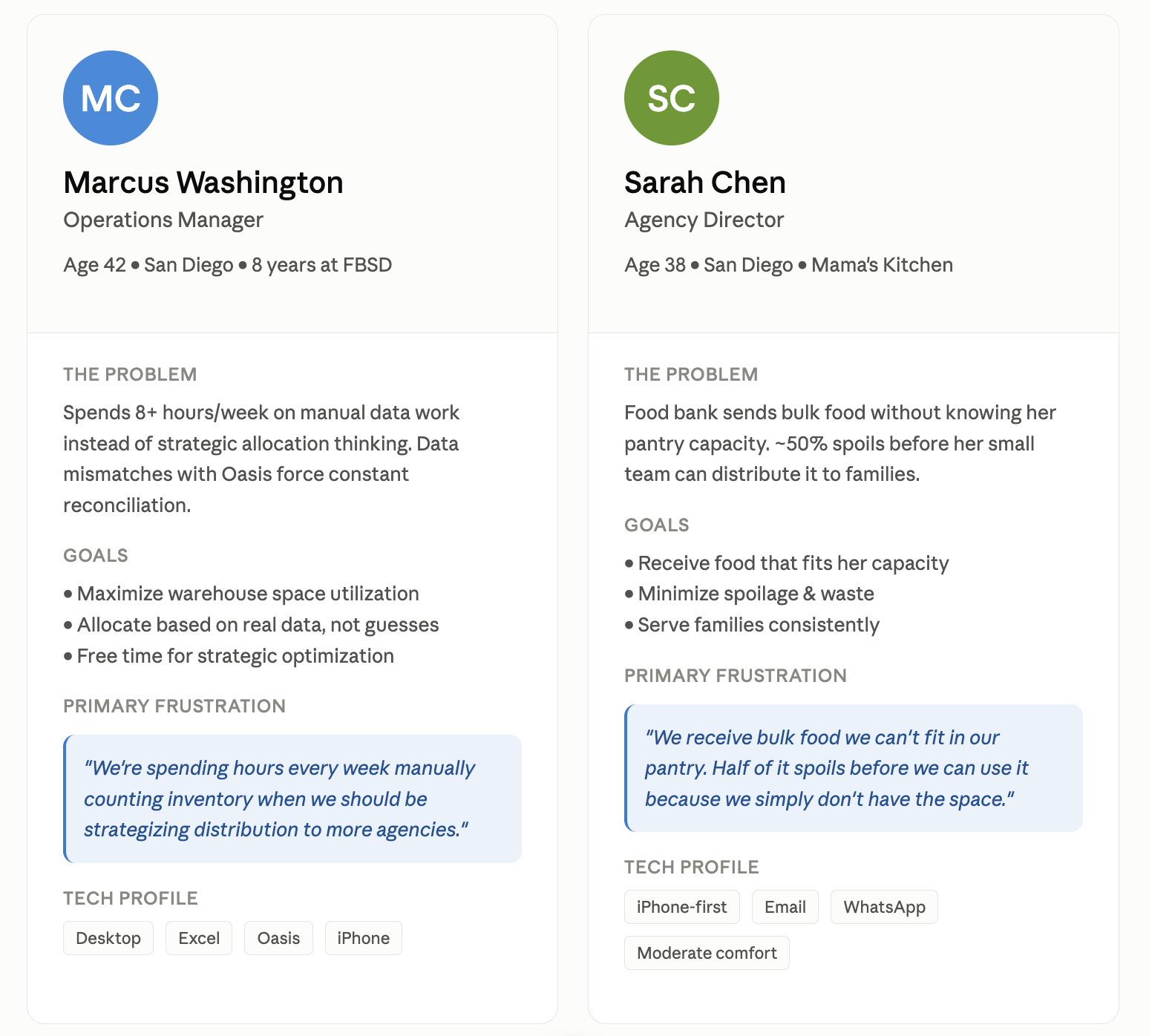
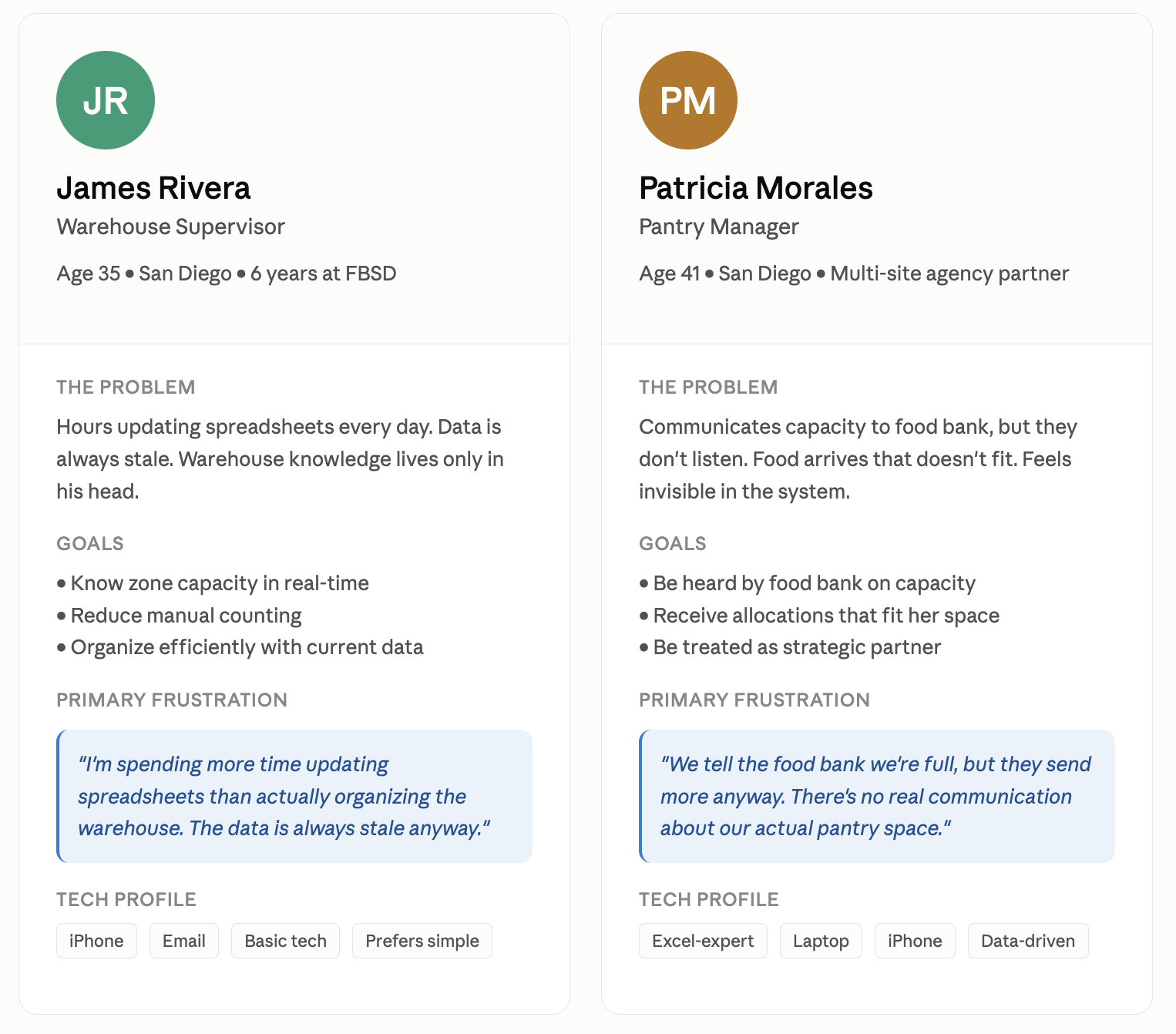
Personas
Features
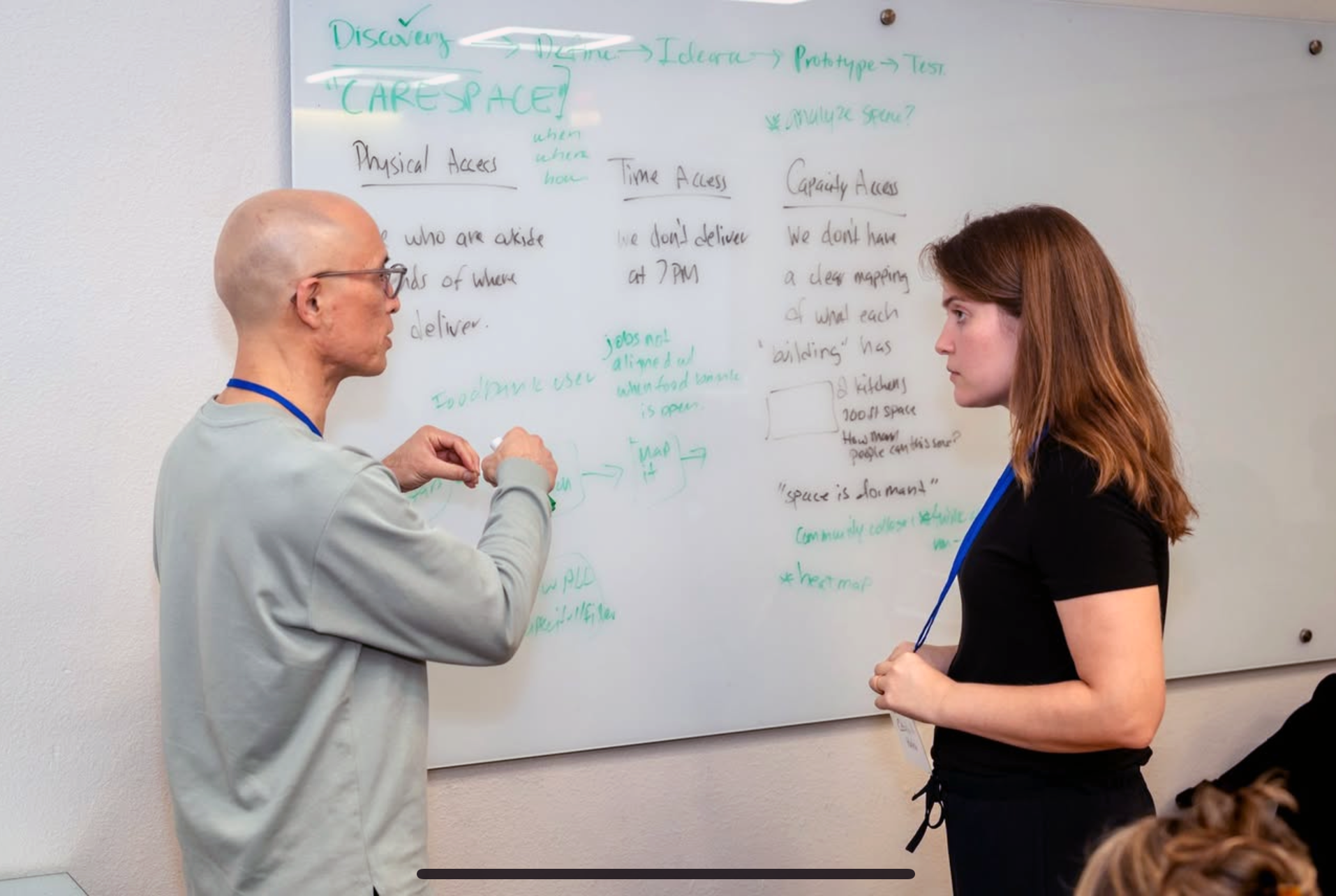
Team Process
Demo | MVP
Mockup
Outcome
Reflection
During a 48-hour design sprint at the UCSD Halıcıoğlu School of Data Science and Computing (HSDSC), our team applied structured retrospective practices, setting clear checkpoints, inviting all voices equally, and reframing our process in real time as research revealed new directions, to transform an initial feature-building instinct into a strategic insight: visibility, not logistics, is the bottleneck.
Through inclusive research interviews with operations leaders, we identified a system problem affecting 100,000+ additional people served monthly, and rather than prescribe solutions, the hunt question was reframed: How might we enable food bank leaders to make allocation decisions informed by real-time agency capacity?
This shared hunt question became our north star, guiding every decision from personas to causal loop mapping to hypothesis validation.
Our sprint succeeds because we prioritized transparent communication checkpoints and willingness to reinvent our practice based on evidence and patterns organically consolidating. This reduced time, freed for strategic work, and team adoption to build the demo and validate our assumptions and iterate our approach.
Working with Claude showed me where AI accelerates a sprint and where it can’t replace the human. My first AI-assisted drafts of the journey map, service blueprint, and personas came back feeling like templates. Getting them right took my sketches, specific prompts, and clear guidelines, refined over several iterations. The lesson: AI speeds up the artifacts, but the specificity has to come from the designer’s research and direction. The speed only paid off because the research and the decisions came first.