

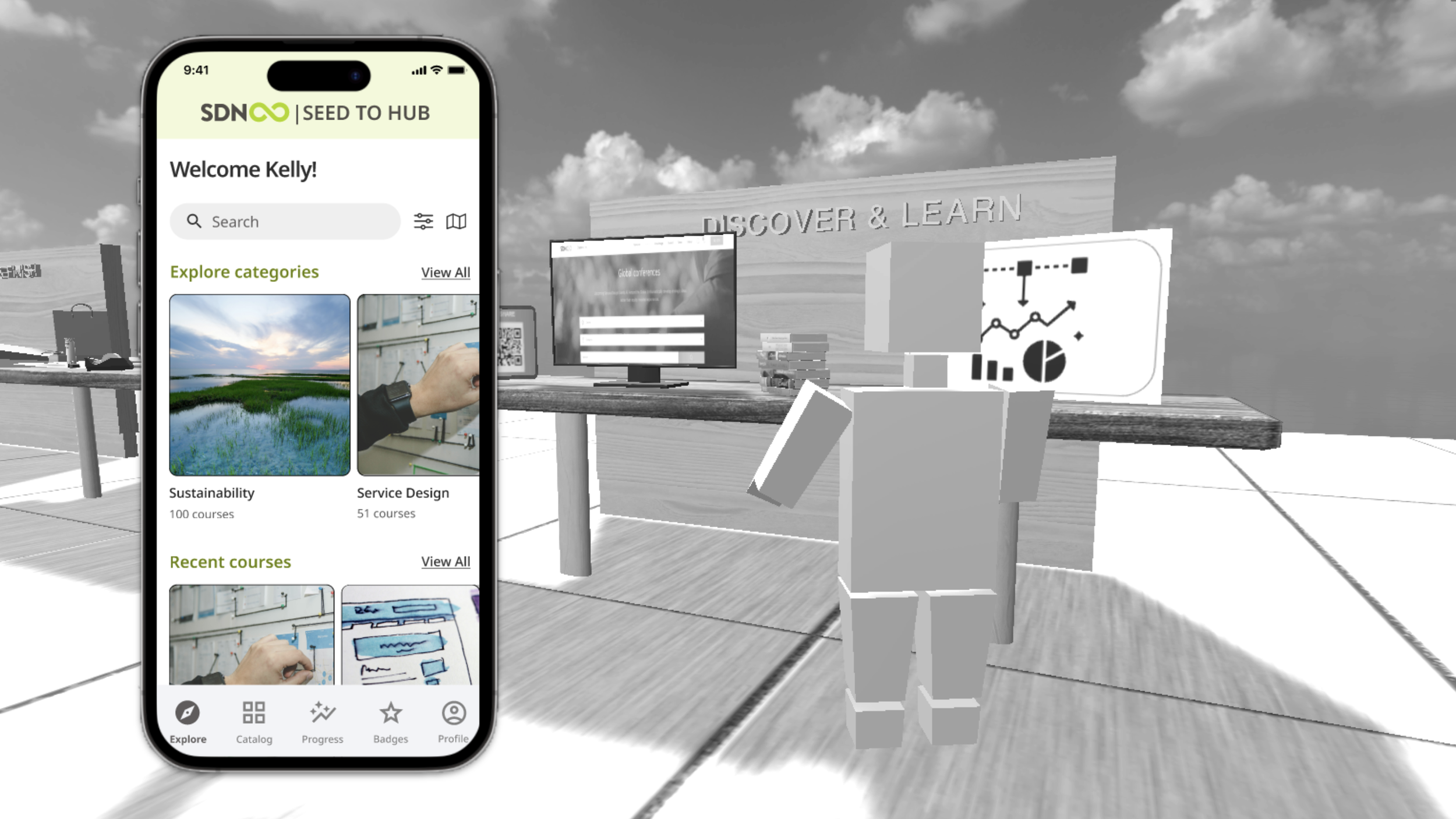
Seed to Hub
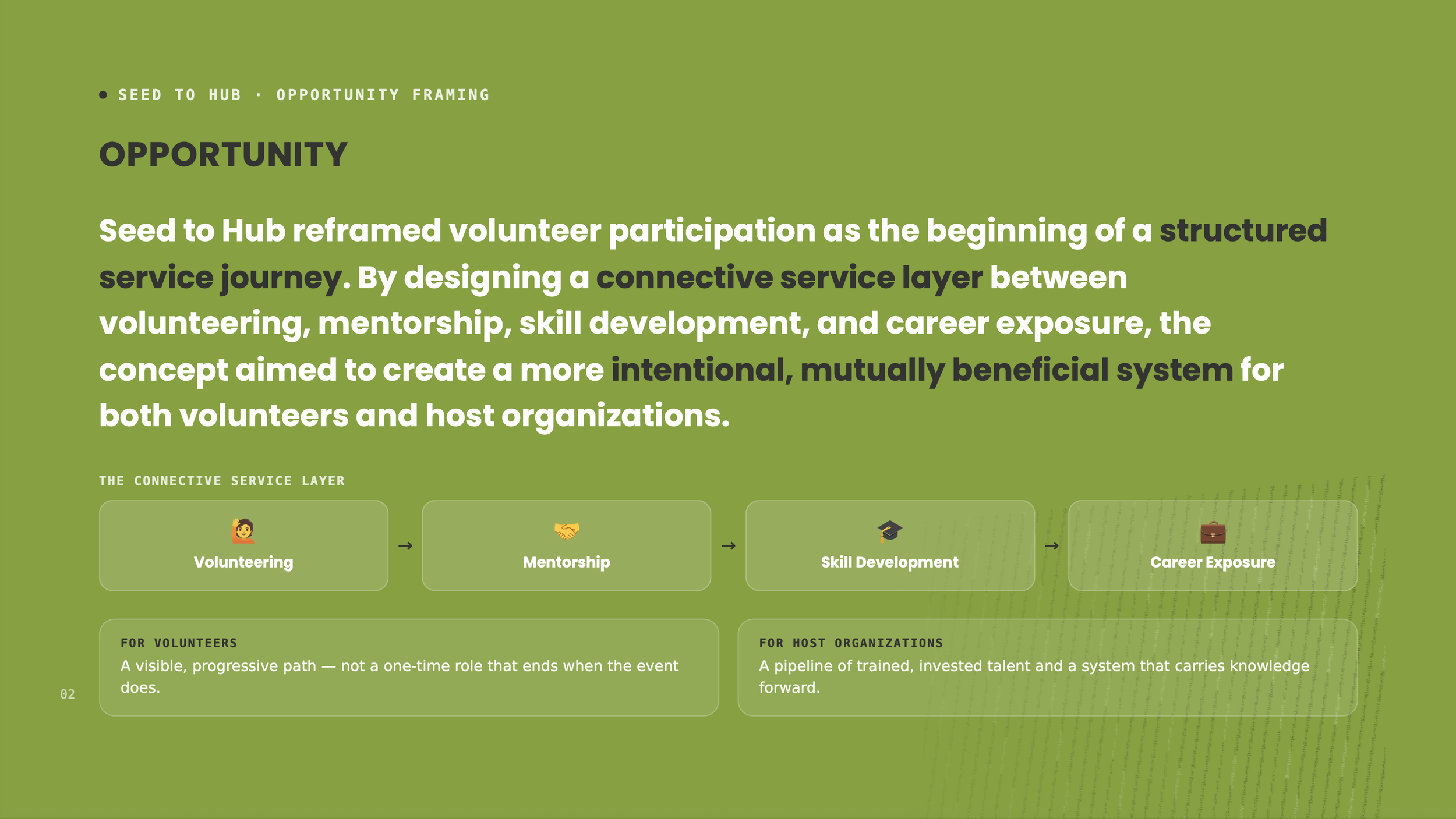
Designing an end-to-end service pipeline that moves volunteers toward structured career pathways
Project Type
Service Design Network (Certification Capstone)
Scope
2024
Role
Service Designer
Contributions
Service concept development, stakeholder facilitation, service blueprint, journey mapping & persona development, ideation & storyboarding, prototyping & usability testing, visual storytelling, executive presentation deck
A service design approach to the future of sustainable tourism at conferences
Overview
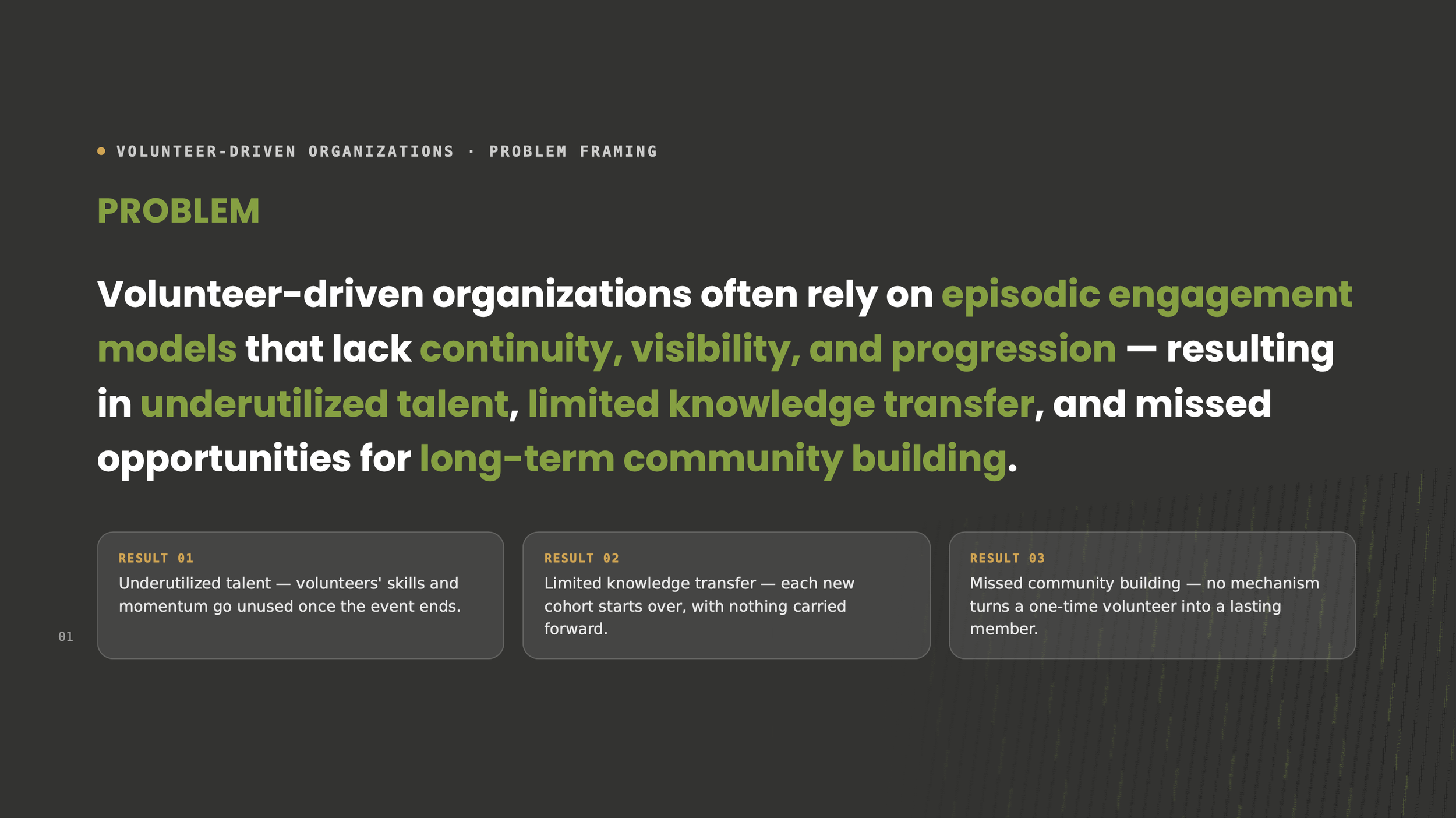
Seed to Hub is a service design concept developed as part of the Service Design Network Certificate Program, focused on addressing a recurring challenge within professional design communities: how to translate short-term volunteer engagement into meaningful, long-term career pathways.
The project explored the disconnect between motivated volunteers seeking growth opportunities and organizations struggling to retain, develop, and activate that talent beyond single events or touchpoints.
How might we reimagine the SDN Volunteer experience through a service lens?
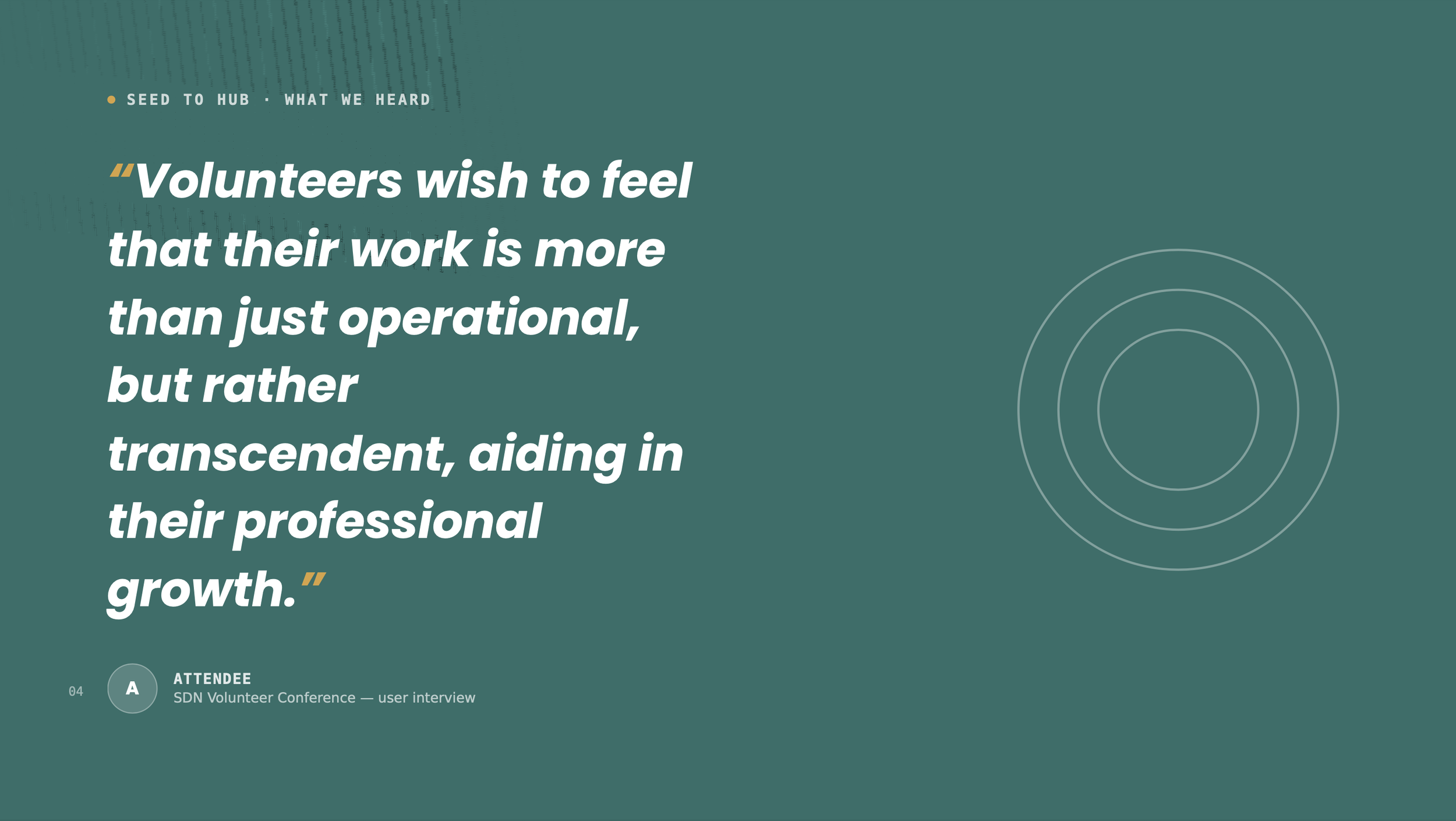
Interview Quote
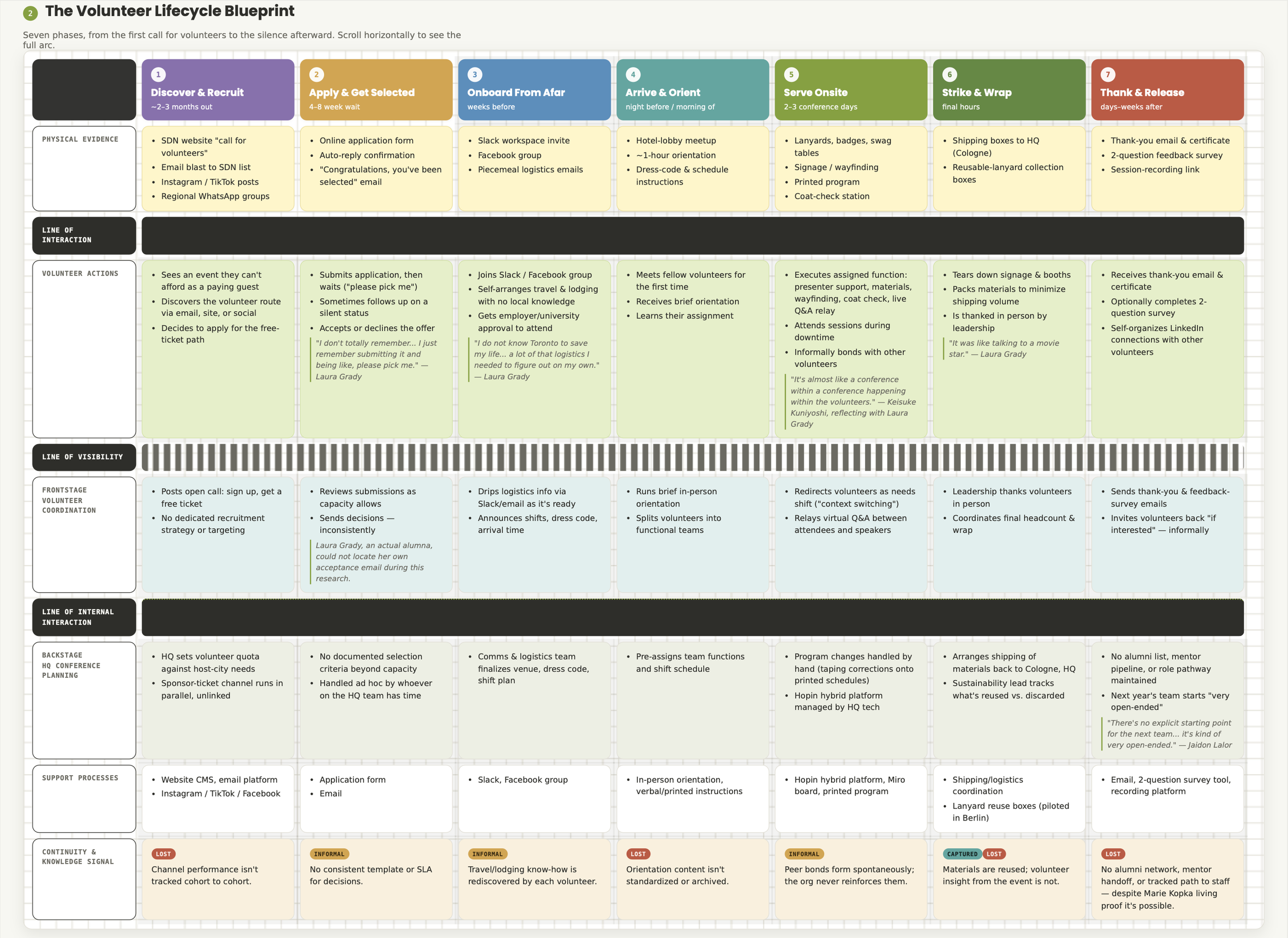
Volunteer LifeCycle Service Blueprint
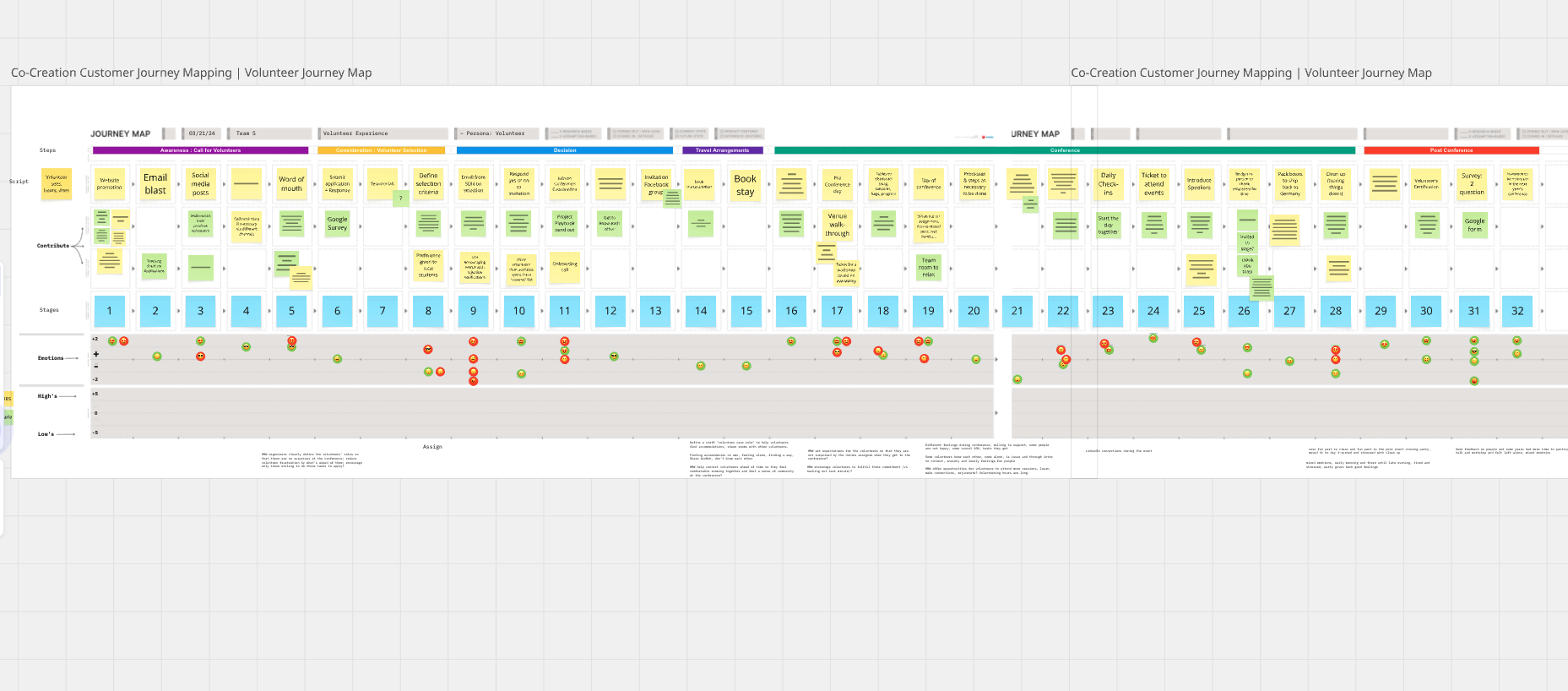
Co-Creation Customer Journey Map | Volunteer Experience
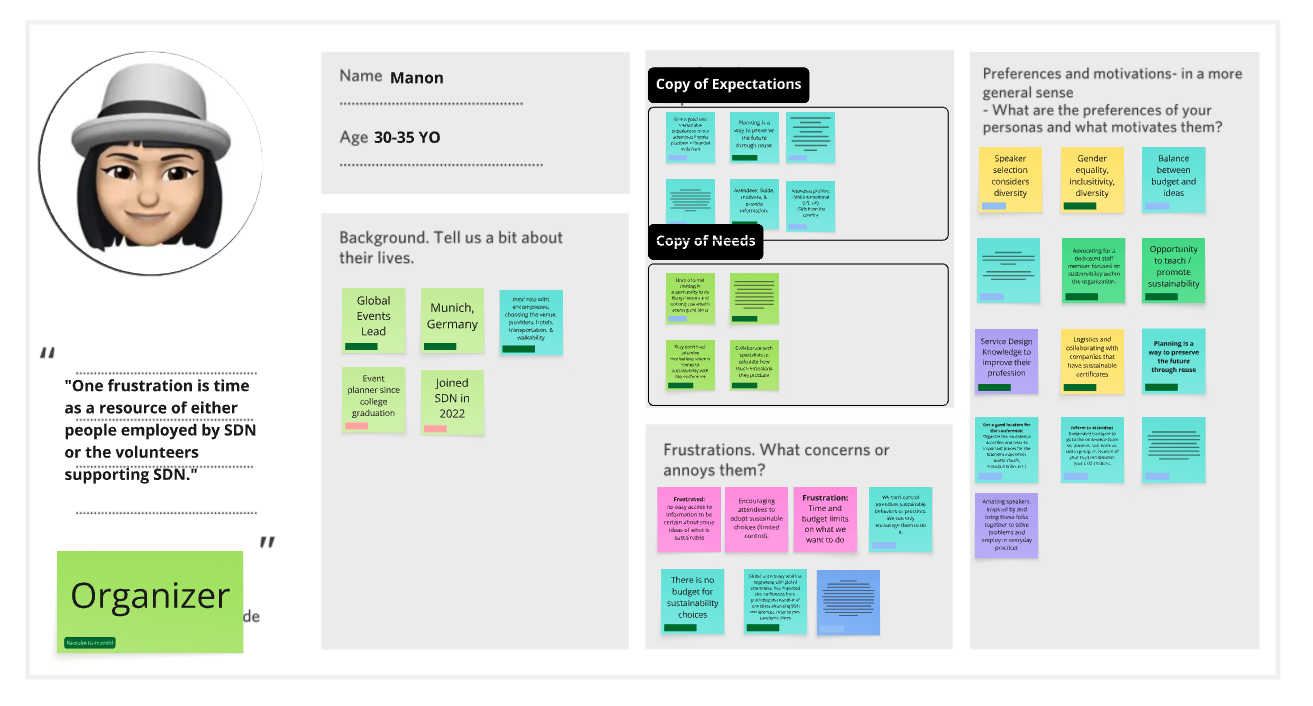
Personas


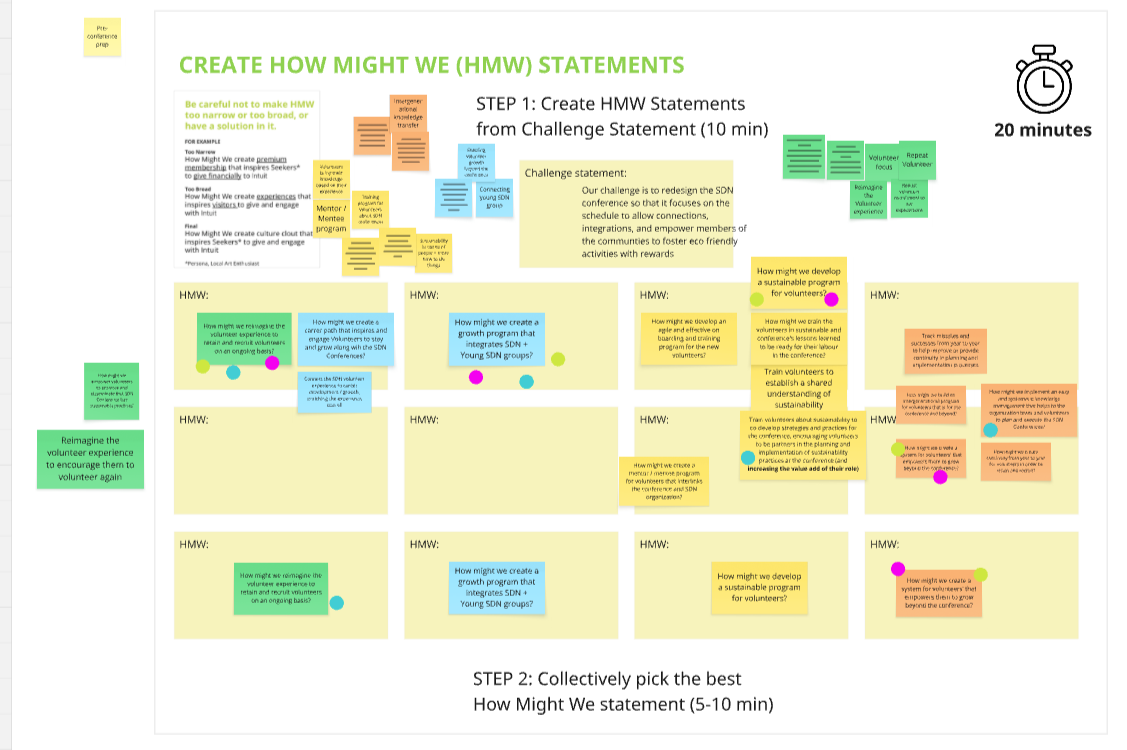
Co-Creation Ideation Sprint


Prototype | Mobile | User Testing
Prototype | Pop-up | User Testing


Reflection
Iteration is a significant process for innovative service design.
Incorporating a prototyping phase through controlled trials allowed different versions of tools and processes to be tested with both employees and customers. This approach created space for learning, iteration, and informed decision-making before committing to full implementation.
Well-structured and thoughtfully facilitated workshops proved to be powerful in surfacing conversations that are often overlooked in day-to-day operations. For many busy professionals, these sessions represented the only opportunity to step back and actively participate in co-creation.
Visualising the intangible elements of a service became a critical first step toward meaningful change. Making these systems visible enabled stakeholders to reflect on their actions, underlying motivations, and interdependencies, fostering shared understanding and alignment within complex environments.